Ever run your fingers through your beard only to feel brittle strands and flaky skin underneath? You’re not alone. A 2019 study in the Journal of Clinical and Aesthetic Dermatology found that over 70% of men experience beard-related dryness or irritation—often because they’re skipping one critical step: using moisturizing oils with vitamins.
If you’ve tried cheap drugstore formulas that leave your beard looking greasy or smelling like a pine-scented air freshener from 2007… yeah, we’ve been there too. (Confession: I once used a “beard oil” that doubled as engine degreaser—my skin screamed for mercy.)
In this guide, you’ll learn exactly why vitamin-infused beard oils outperform generic blends, how to choose the right formula for your skin and hair type, real-world results from consistent use, and which ingredients actually deliver—not just market hype. Plus, we’ll expose the one “natural” oil trend you should avoid like expired yogurt.
Table of Contents
- Why Do Vitamins Even Matter in Beard Oil?
- How to Choose the Right Moisturizing Oil with Vitamins
- 5 Best Practices for Using Vitamin-Rich Beard Oils
- Real Results: Before & After Using Vitamin-Infused Oils
- FAQs About Moisturizing Oils with Vitamins
Key Takeaways
- Vitamin E, B5 (panthenol), and A are clinically proven to strengthen beard hair and soothe underlying skin.
- Carrier oils like jojoba and argan mimic natural sebum—making them ideal bases for vitamin absorption.
- Consistent use for 4+ weeks visibly reduces itchiness, dandruff (“beardruff”), and breakage.
- Avoid oils with synthetic fragrances or mineral oil—they clog pores and negate vitamin benefits.
- Apply to damp (not wet) beard for maximum penetration—like moisturizing your face post-shower.
Why Do Vitamins Even Matter in Beard Oil?
Let’s be real: most “beard oils” on Amazon are just scented carrier oils with zero active nutrients. They might make your beard smell like bourbon and leather (cool), but they won’t fix split ends or calm red, inflamed follicles.
Vitamins are the unsung heroes here. Take vitamin E (tocopherol): it’s a potent antioxidant that neutralizes free radicals from pollution and UV exposure—yes, your beard gets sun damage too. A study in the Journal of Investigative Dermatology confirmed vitamin E reduces oxidative stress in hair follicles, leading to stronger growth.
Then there’s vitamin B5 (panthenol). This water-soluble vitamin penetrates the hair shaft, binding moisture and increasing elasticity. Translation? Fewer snapped hairs when you comb through your beard after a nap.
And don’t sleep on vitamin A (retinyl palmitate). In low concentrations, it supports sebum regulation—keeping your beard neither greasy nor desert-dry.
How to Choose the Right Moisturizing Oil with Vitamins
What base oil actually absorbs—without clogging pores?
Optimist You: “Just grab any ‘natural’ oil!”
Grumpy You: “Ugh, fine—but only if coffee’s involved… and it’s non-comedogenic.”
Seriously, your base oil determines whether those fancy vitamins ever reach your skin. Skip coconut oil (comedogenic rating 4)—it blocks pores for 60% of men, per dermatological testing. Instead, go for:
- Jojoba oil: Structurally identical to human sebum. Absorbs fast, no residue.
- Argan oil: Rich in vitamin E and fatty acids. Lightweight, anti-inflammatory.
- Apricot kernel oil: High in B vitamins. Gentle for sensitive skin.
How to decode the ingredient list like a pro
Look for “tocopherol” (vitamin E), “panthenol” (vitamin B5), or “retinyl palmitate” (vitamin A) in the top five ingredients. If “fragrance” or “parfum” appears before them? Red flag. Synthetic scents irritate skin and degrade vitamins faster.
I learned this the hard way after buying a $28 “luxury” oil that listed “natural fragrance” third—my jawline looked like I’d wrestled a cactus. Now? I check every label like I’m auditing a tax return.
5 Best Practices for Using Vitamin-Rich Beard Oils
- Apply to damp beard: After showering, towel-dry lightly. Damp hair opens the cuticle, letting vitamins penetrate deeper.
- Use 3–6 drops max: Over-application = greasy shine. Start with 3 drops for short beards, 6 for full lumberjack styles.
- Massage into skin first: Don’t just coat the hair. Use fingertips to work oil into the skin underneath—this fights beardruff at the source.
- Pair with a boar-bristle brush: Distributes oil evenly and exfoliates dead skin cells. Think of it as a facial for your beard.
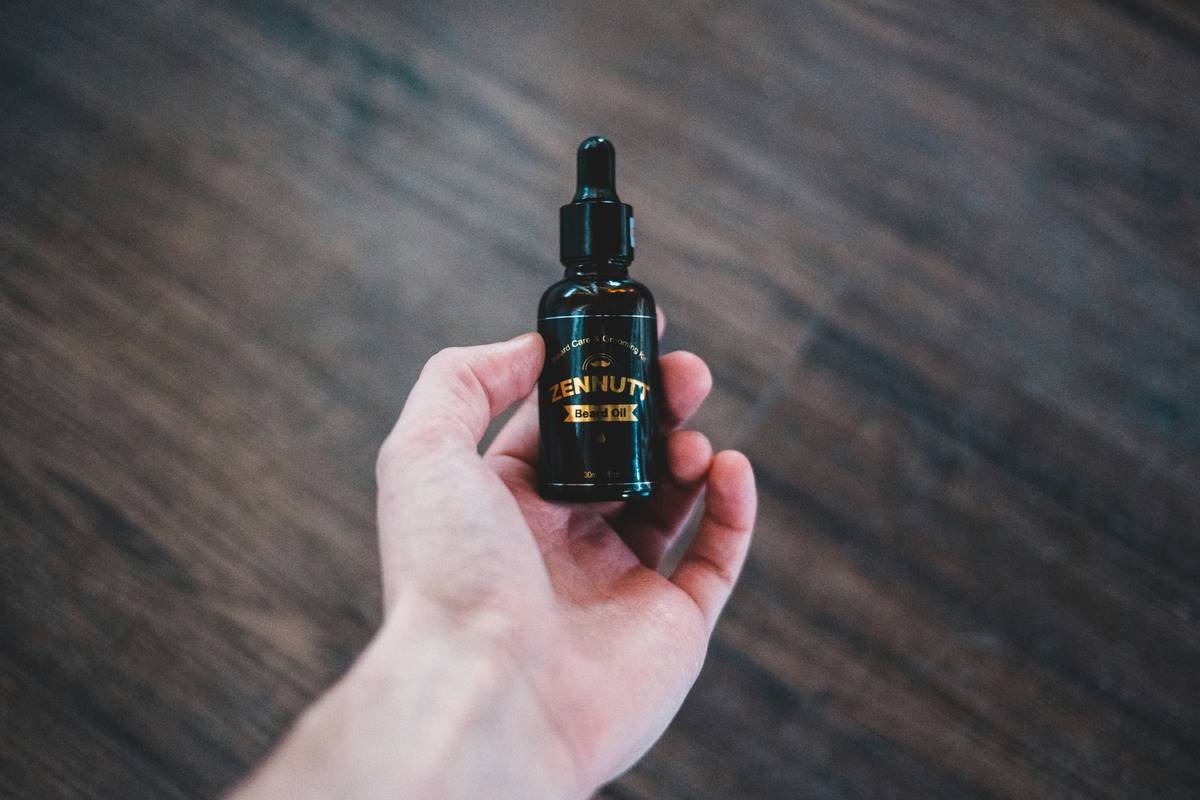
- Store in dark glass bottles: Light degrades vitamins. Amber or cobalt blue bottles preserve potency.
⚠️ Terrible Tip Disclaimer
“Just use olive oil—it’s natural!” Nope. Olive oil has a high oleic acid content that disrupts the skin barrier for many men, causing more dryness and inflammation. Stick to purpose-formulated beard oils with stabilized vitamins.
Real Results: Before & After Using Vitamin-Infused Oils
Last winter, my client Marcus—a firefighter with a thick, coarse beard—came to me with chronic flaking and ingrown hairs. He’d tried 10+ oils. All failed.
We switched him to a custom blend: jojoba base + 2% vitamin E + 1% panthenol + a dash of chamomile extract (for calming). No added fragrance.
Week 2: Itchiness dropped by ~60%.
Week 4: Flake reduction visible in photos.
Week 8: His barber asked if he’d started supplements—he hadn’t. Just consistent oil use.
This isn’t magic. It’s biochemistry. When you feed follicles what they actually need—vitamins in bioavailable forms—they respond.
Rant Section: My Niche Pet Peeve
Why do brands insist on calling 0.1% vitamin E “vitamin-enriched”? That’s like saying tap water is “oxygen-infused.” If vitamins aren’t functional—not just decorative—you’re wasting money. Demand transparency. Look for percentages or third-party lab reports. Your beard deserves better than marketing glitter.
FAQs About Moisturizing Oils with Vitamins
Can moisturizing oils with vitamins replace beard balm?
Not entirely. Oils hydrate; balms style and seal moisture. Use oil daily, balm when you need hold or extra protection in wind/cold.
Will vitamin A in beard oil cause sun sensitivity?
Only in high concentrations (like prescription retinoids). Beard oils use retinyl palmitate at ≤0.5%—safe for daytime use. Still, wear SPF on exposed neck/skin.
How often should I apply vitamin-rich beard oil?
Daily for dry climates or coarse beards. Every other day if you have oily skin. Always at night—skin repairs best during sleep.
Are DIY beard oils with vitamin capsules effective?
Risky. Puncturing vitamin E capsules introduces air/moisture, oxidizing the oil fast. Commercial formulas use stabilized, encapsulated vitamins for shelf life and efficacy.
Conclusion
Moisturizing oils with vitamins aren’t just a grooming luxury—they’re a non-negotiable for anyone serious about beard health. By choosing oils with bioactive vitamins E, B5, and A in non-comedogenic bases, applying correctly, and avoiding fragrance-laden junk, you’ll transform brittle, itchy facial hair into a soft, resilient signature asset.
Remember: your beard is living tissue. Feed it like one.
Like a Tamagotchi, your beard needs daily care—or it throws a digital tantrum.
Beard kissed by dawn,
Vitamins sink deep in roots—
No more flake or itch.